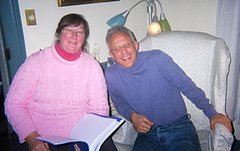
O-kay, so I'm really late with this blog. I had other things to do.
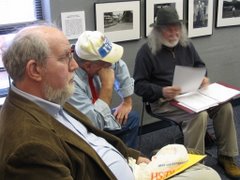
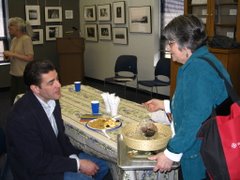
Let's skip the poem recaps and hit the high spots, the highest of which was the presence of Catherine Connolly and Israel Stark, who not only came to check things out but bravely came with poems. We gave them kudos for courage and hoped not to frighten them away, as has been known to happen. I have their emails, addition to the list pending.
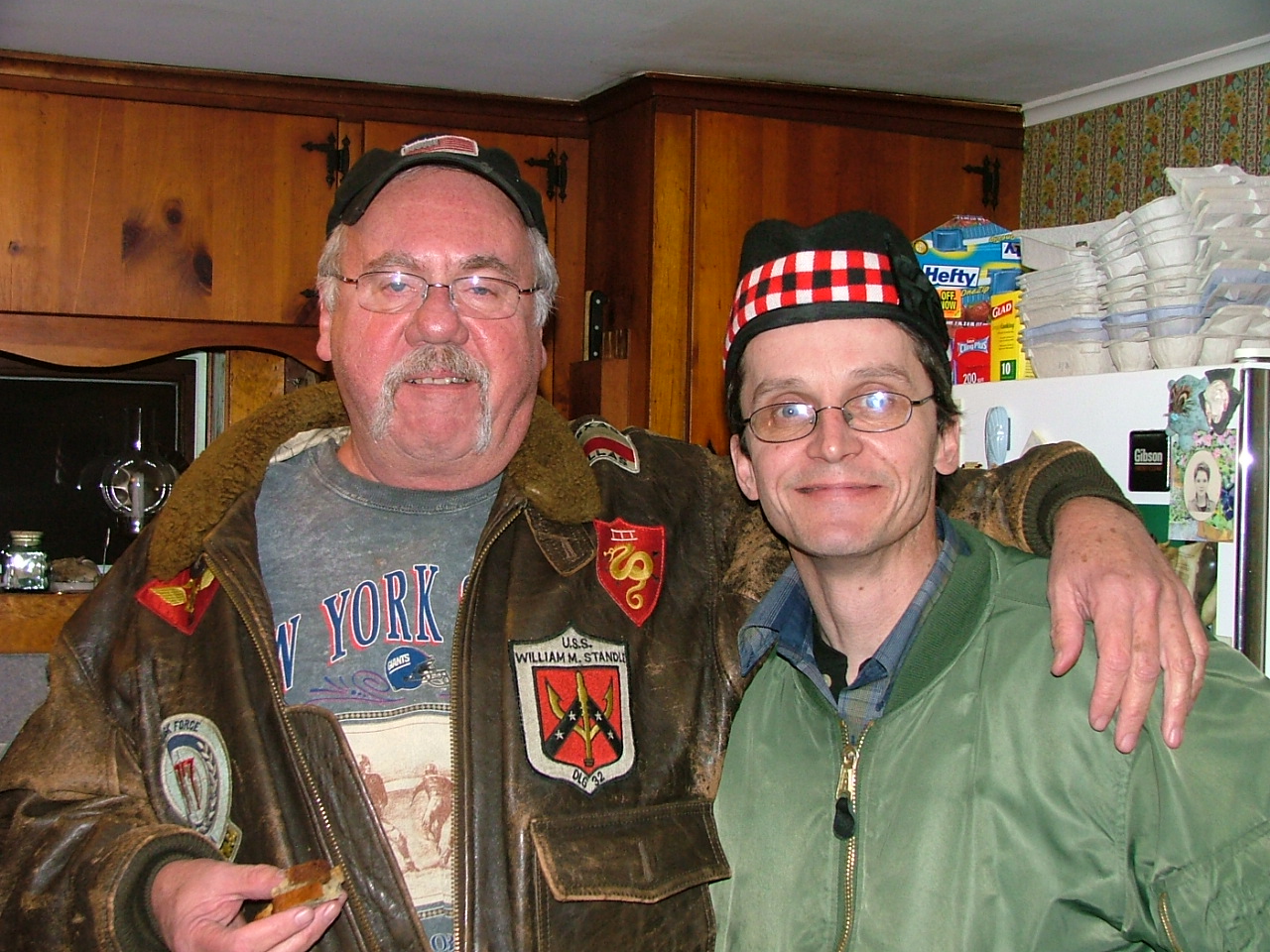
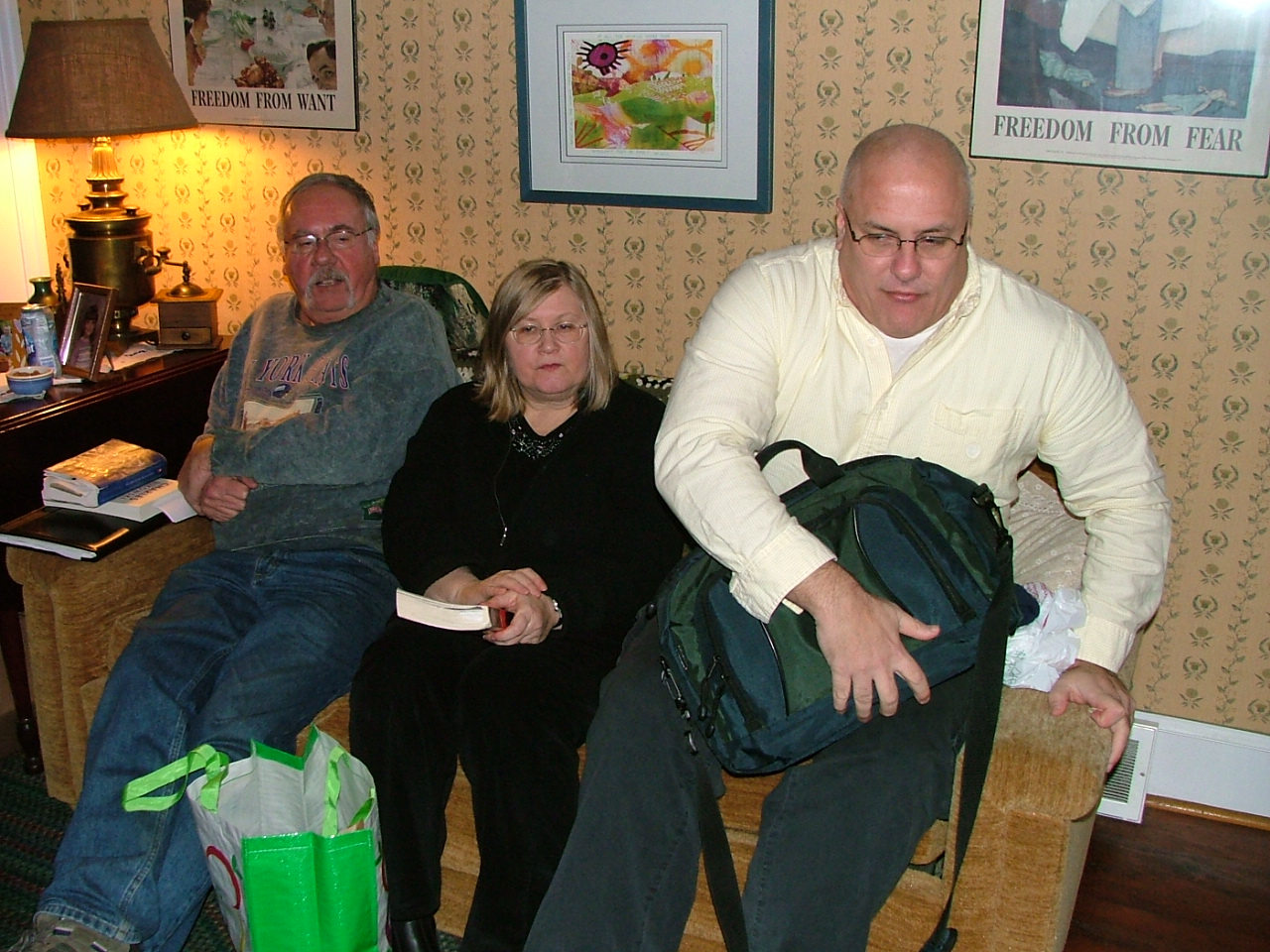
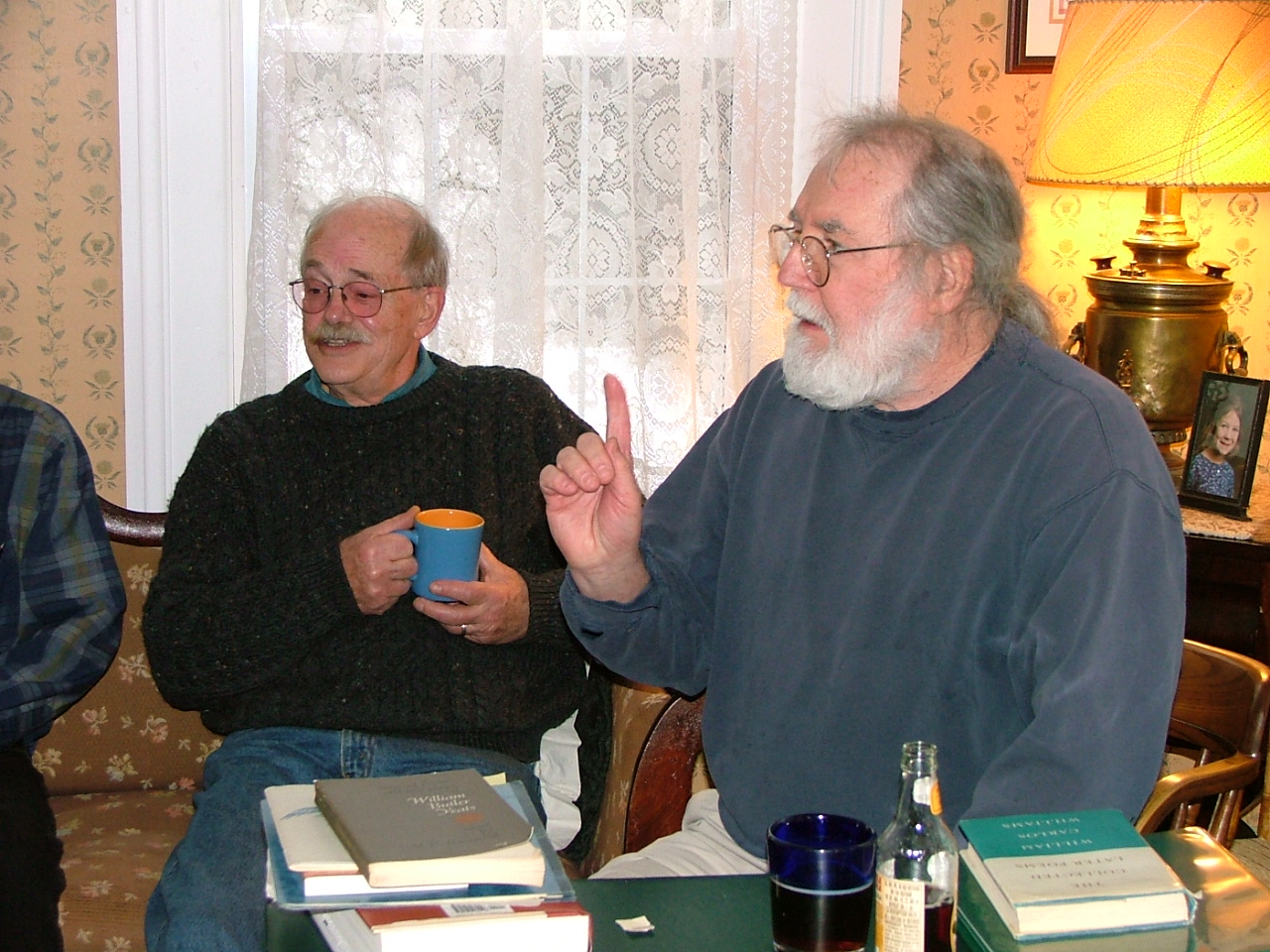
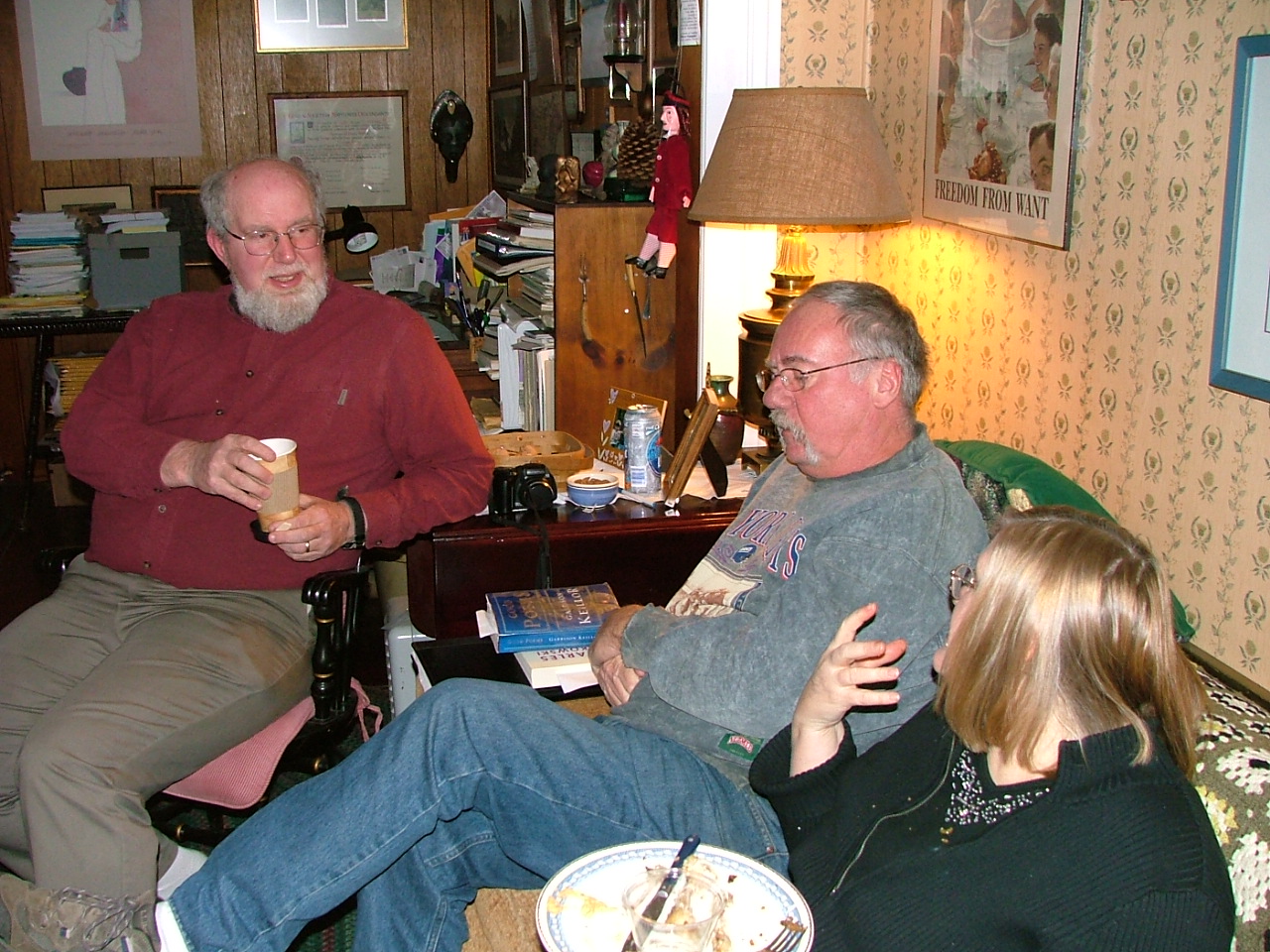
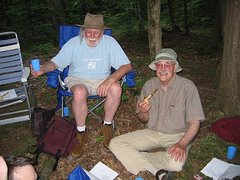
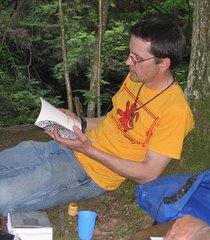
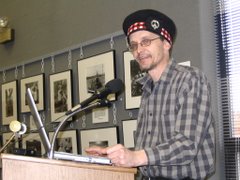
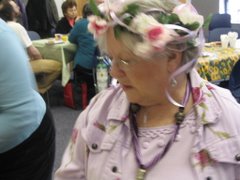
There were a dozen of us filling the tables; Jim Triolet bouncing up and sitting down guitarless, Tim chortling and dialing his phone over and over, Alan back at Black Mountain. While debating a title for Catherine's Waves Dan got pretty mad at me. Larry sprawled around in those ugly pj's. I was enamored with Israel's hand printing, Dennis arty scrawl and Obee's font and believe that acceptance or rejection of a poem is so related to its presentation. I always appreciate Tim including photos. And doodles. Doodles would be good.
I am barren of poems. Gushing tattoos.
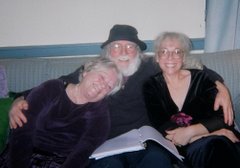
Some of Us

Dennis Sullivan, Beverly Osborne, Tom Corrado, Edie Abrams, Art Willis, Alan Casline (all seated); Paul Amidon, Mike Burke, Tim Verhaegen, Mark O'Brien, Barbara Vink, Philomena Moriarty
Tuesday, September 21, 2010


Tuesday, September 7, 2010
DIDGERIDOO from Dennis
Dear Poe-ettes,
As probably all are aware, a few weeks ago Arthur's [Arthur Willis] TO THE TUNE OF A DIDGERIDOO AND STICKS came out under the auspices of Benevolent Bird Press, very nicely done as we might expect from what we have seen from that press already. And done with great dispatch to accommodate the reality of the hour.
Arthur [Willis] had wanted to read that poem accompanied by a didgeridoo and sticks as advertised and plans were made for him to do so but they got scotched somehow. When the Bird [Alan Casline], poet and publisher of the Benevolent Bird imprint series, saw this to be the case he went to the Willis Farm in Quaker Street, New York on Tuesday August 24 to record Arthur reading his long poem. He accompanied Arthur with his hand-held skin drum.
[Incidentally, the next day, Arthur's wife Judy, told me the reading had taken such an emotional toll that the poem went to bed to rest, toll as in healthy catharsis.]
Later in his studio Tom Corrado, using dubbing measures and the like, added the didgeridoo and mbira [an African musical instrument consisting of a hollow gourd or wooden resonator and a number of usually metal strips that vibrate when plucked] to the recorded reading.
Also a part of the performance were the sweet girglings of Gaia, a bird perched on a tree-branch at the Willis farm who seemed to be sent by the gods to add nature?s trills to the event.
Yesterday, Saturday September 4 [my mother's birthday] the Bird, Edie [Abrams], and I headed to the Willis Farm to visit Arthur and play for him the recording of his latest and most beautiful poem.
What was most stunning to see at first, was the beautiful jewel case Bird had created for the CD, linen-like cover stock measuring 5 1/2 x 8 1/2 with a slit in the top to access the CD.
The front of the case sports a most extraordinary color design of SUN, MEETING PLACE, STAR, AND TWO CONNECTED SPRINGS, water color paintings in fact, in greens and blues and yellows and reds. They look like four Buddhist prayer flags two on top of two.
A note about this: anytime you go to a music store and buy a CD in a plastic-captioned jewel case in the future, after seeing this production, you will once again see reasons why the globalizing mercantile economy is such a sham. Bird has once again produced a great work of art.
And w/r/t the CD itself, its contents, Arthur's reading is a tour de force. He sounds like a mixture of Ginsberg, Ferlinghetti, Snyder, and Corso reading Beat poetry from a San Francisco loft. His voice has a rasp and urgency to it that is compelling.
Anyone who is a fan of Arthur's poetry or of good poetry or even feigns such, or who perhaps regards Arthur as a mensch of grand proportions, will want to get this CD as quickly as possible. Bird plans to make 100 with 30 already done.
And Tom Corrado's musical input is no icing on an already-delicious cake but an integral part of making the performance the tour de force I mentioned. His perfectly-timed and proportioned crescendos fit in perfectly and will get you.
And while Bird's drumming, when he performed with the Metamorphosis Trio, left much to be desired, here his contribution adds considerably as well. It too fits perfectly. This piece could have been done live in the basement of a Village coffeehouse in the late 1950s it is so good.
Before went into the house to listen to the recording, Bird read two beautiful poems he had written for Arthur, poems of deep feeling, expressing deep appreciation for his grand master of a friend. Hopefully we will get to hear them again sometime.
On the way out to Quaker Street, Edie remarked that she thought the last time we visited Arthur he did not remember her name. I was not sure he remembered mine.
I brought with me his earlier book of poems POET IN A FLYING SUIT (1986)?for which incidentally I set up a reading in St. Matthew's Church, Voorheesville, at which several hundred showed up to listen, a great afternoon with Arthur reading from the pulpit which I took out of my bag to show him, asking him what these were. He gave his attention to something else.
I then said: Arthur, what is my name? Do you know who I am? It was clear he was struggling to come up with something and then slyly he added, You are the maestro. I laughed heartily and said, what a trouble-maker you are and he laughed as heartily or nearly so.
Once again, like a simple bodhisattva, he spoke in aphorisms as if quoted from some religious scripture. He talked about the importance of sharing, that that is the essence of being human and that anyone who does not take that upon him- or herself hardly qualifies for the title of ser humano.
He spoke as well of the importance of meeting human needs at all levels in society, that that is the purpose of being together, and that that is our mission in life. Later he spoke about poetry, that is how he had responded to someone earlier about poetry, with: it is very hard to write a poem.
I told him while the four of us sat there, that there are people who play baseball, who hit the ball, catch a few fly balls, and then there are baseball players. And the latter in the sports world would be mighty careful to qualify themselves among the latter. I said the same is true for poets, there are those who write poems and read them and there are poets, yet the former speak of themselves as if poets, as if . . .
Finally, weeks ago Arthur's doctor told him that tea is good for cleansing the system so, once again he said yesterday?as he had told me many times?that the tea is beating the cancer and that that is a good sign. Yet later he did allude to the fact that he is dying. I felt for the first time yesterday he had found the words to tell what was going on in his heart?a start to a finish with dignity perhaps. I keep thinking of the end of Aldous Huxley and how his wife Laura cared for him with such dignity, meeting his needs at every step of the way. [See Mrs. Huxley?s memoir, THIS TIMELESS MOMENT: A PERSONAL VIEW OF ALDOUS HUXLEY? (Farrar, Straus & Giroux, 1968)].
Art singled out the poetry of Tom Corrado, saying he is a real poet, and spoke of Jim Williams with such enthusiasm, how Jim has been a model for him, a mensch among menches.
Last night, laying in bed, I felt like I was dying too, a piece of me was drifting off to some place I had never known nor seen before. And it did not concern me. We will all be there and not in tune with actuarial statistics.
I will end by noting how this grand maestro of a teacher, Arthur, has had the courage to allow students to speak their hears and minds in his class, always capable of relating any curriculum-related materials to what they had to say at the moment, a quality of very rare and great teachers. His word was so respected that letters of recommendation greased the skids for many students to get into the most prestigious of colleges and universities. I saw it happen.
Several weeks ago, when the head of the Meeting House in Quaker Street asked Arthur what he would like the younger Quakers to know about being a Quaker, Arthur said, as I mentioned here before, how essential it is for a person to pay attention to the silence in her- or himself so that when a person speaks, she or he will not make an ass of her- or himself, not as in the person being concerned about being a fool, but as in not having taken the opportunity to be a contributor to the great venture we call life in community with something profound to say and be.
La Paz,
Dennis
Dennis Sullivan
September 5, 2010
8:20 am
Voorheesville, New York
As probably all are aware, a few weeks ago Arthur's [Arthur Willis] TO THE TUNE OF A DIDGERIDOO AND STICKS came out under the auspices of Benevolent Bird Press, very nicely done as we might expect from what we have seen from that press already. And done with great dispatch to accommodate the reality of the hour.
Arthur [Willis] had wanted to read that poem accompanied by a didgeridoo and sticks as advertised and plans were made for him to do so but they got scotched somehow. When the Bird [Alan Casline], poet and publisher of the Benevolent Bird imprint series, saw this to be the case he went to the Willis Farm in Quaker Street, New York on Tuesday August 24 to record Arthur reading his long poem. He accompanied Arthur with his hand-held skin drum.
[Incidentally, the next day, Arthur's wife Judy, told me the reading had taken such an emotional toll that the poem went to bed to rest, toll as in healthy catharsis.]
Later in his studio Tom Corrado, using dubbing measures and the like, added the didgeridoo and mbira [an African musical instrument consisting of a hollow gourd or wooden resonator and a number of usually metal strips that vibrate when plucked] to the recorded reading.
Also a part of the performance were the sweet girglings of Gaia, a bird perched on a tree-branch at the Willis farm who seemed to be sent by the gods to add nature?s trills to the event.
Yesterday, Saturday September 4 [my mother's birthday] the Bird, Edie [Abrams], and I headed to the Willis Farm to visit Arthur and play for him the recording of his latest and most beautiful poem.
What was most stunning to see at first, was the beautiful jewel case Bird had created for the CD, linen-like cover stock measuring 5 1/2 x 8 1/2 with a slit in the top to access the CD.
The front of the case sports a most extraordinary color design of SUN, MEETING PLACE, STAR, AND TWO CONNECTED SPRINGS, water color paintings in fact, in greens and blues and yellows and reds. They look like four Buddhist prayer flags two on top of two.
A note about this: anytime you go to a music store and buy a CD in a plastic-captioned jewel case in the future, after seeing this production, you will once again see reasons why the globalizing mercantile economy is such a sham. Bird has once again produced a great work of art.
And w/r/t the CD itself, its contents, Arthur's reading is a tour de force. He sounds like a mixture of Ginsberg, Ferlinghetti, Snyder, and Corso reading Beat poetry from a San Francisco loft. His voice has a rasp and urgency to it that is compelling.
Anyone who is a fan of Arthur's poetry or of good poetry or even feigns such, or who perhaps regards Arthur as a mensch of grand proportions, will want to get this CD as quickly as possible. Bird plans to make 100 with 30 already done.
And Tom Corrado's musical input is no icing on an already-delicious cake but an integral part of making the performance the tour de force I mentioned. His perfectly-timed and proportioned crescendos fit in perfectly and will get you.
And while Bird's drumming, when he performed with the Metamorphosis Trio, left much to be desired, here his contribution adds considerably as well. It too fits perfectly. This piece could have been done live in the basement of a Village coffeehouse in the late 1950s it is so good.
Before went into the house to listen to the recording, Bird read two beautiful poems he had written for Arthur, poems of deep feeling, expressing deep appreciation for his grand master of a friend. Hopefully we will get to hear them again sometime.
On the way out to Quaker Street, Edie remarked that she thought the last time we visited Arthur he did not remember her name. I was not sure he remembered mine.
I brought with me his earlier book of poems POET IN A FLYING SUIT (1986)?for which incidentally I set up a reading in St. Matthew's Church, Voorheesville, at which several hundred showed up to listen, a great afternoon with Arthur reading from the pulpit which I took out of my bag to show him, asking him what these were. He gave his attention to something else.
I then said: Arthur, what is my name? Do you know who I am? It was clear he was struggling to come up with something and then slyly he added, You are the maestro. I laughed heartily and said, what a trouble-maker you are and he laughed as heartily or nearly so.
Once again, like a simple bodhisattva, he spoke in aphorisms as if quoted from some religious scripture. He talked about the importance of sharing, that that is the essence of being human and that anyone who does not take that upon him- or herself hardly qualifies for the title of ser humano.
He spoke as well of the importance of meeting human needs at all levels in society, that that is the purpose of being together, and that that is our mission in life. Later he spoke about poetry, that is how he had responded to someone earlier about poetry, with: it is very hard to write a poem.
I told him while the four of us sat there, that there are people who play baseball, who hit the ball, catch a few fly balls, and then there are baseball players. And the latter in the sports world would be mighty careful to qualify themselves among the latter. I said the same is true for poets, there are those who write poems and read them and there are poets, yet the former speak of themselves as if poets, as if . . .
Finally, weeks ago Arthur's doctor told him that tea is good for cleansing the system so, once again he said yesterday?as he had told me many times?that the tea is beating the cancer and that that is a good sign. Yet later he did allude to the fact that he is dying. I felt for the first time yesterday he had found the words to tell what was going on in his heart?a start to a finish with dignity perhaps. I keep thinking of the end of Aldous Huxley and how his wife Laura cared for him with such dignity, meeting his needs at every step of the way. [See Mrs. Huxley?s memoir, THIS TIMELESS MOMENT: A PERSONAL VIEW OF ALDOUS HUXLEY? (Farrar, Straus & Giroux, 1968)].
Art singled out the poetry of Tom Corrado, saying he is a real poet, and spoke of Jim Williams with such enthusiasm, how Jim has been a model for him, a mensch among menches.
Last night, laying in bed, I felt like I was dying too, a piece of me was drifting off to some place I had never known nor seen before. And it did not concern me. We will all be there and not in tune with actuarial statistics.
I will end by noting how this grand maestro of a teacher, Arthur, has had the courage to allow students to speak their hears and minds in his class, always capable of relating any curriculum-related materials to what they had to say at the moment, a quality of very rare and great teachers. His word was so respected that letters of recommendation greased the skids for many students to get into the most prestigious of colleges and universities. I saw it happen.
Several weeks ago, when the head of the Meeting House in Quaker Street asked Arthur what he would like the younger Quakers to know about being a Quaker, Arthur said, as I mentioned here before, how essential it is for a person to pay attention to the silence in her- or himself so that when a person speaks, she or he will not make an ass of her- or himself, not as in the person being concerned about being a fool, but as in not having taken the opportunity to be a contributor to the great venture we call life in community with something profound to say and be.
La Paz,
Dennis
Dennis Sullivan
September 5, 2010
8:20 am
Voorheesville, New York
Friday, August 27, 2010
Stoneman Rocks
Edie started off the evening with one her best poems, about getting ready to present herself to the world in the tropical environment of her bathroom. There was some discussion about the end line "and smile" and about the trademarking of "Ecosphere", but nothing that detracted from the good poem. Dennis remarked that it was her best use of language ever.
Dennis and Tim were particularly on the money with their critiques last night, both offering valuable insights in several instances. Dennis' own poem "A Week After My Annual Eye Exam" extolled his visionary experiences and asked the question (unanswered)- is the poem a warning or a dream? Best line: I live at 26 Utopia Street... Best phrase: sorry song of night Dennis was taken aback it seemed because we pointed out two(!) typos.
Tim presented a wunnerful, wunnerful (my words) work called "Morning Mourning Meltdowns" dealing with death, obituaries, Kubler-Ross cycle, and a lot of other things. It included a marvelous quote by Tim's dad which I won't print because it had a BAD word in it.
The Stoneman rocks! That's from Obee, said because Paul's poem about chasing the sleep demons away did rock. They watched from the shore, helpless to reach me.... We applauded.
Dan caused some controversey with "A Poe-Try", a knockoff EAP poem. Dan tried to recreate the atmosphere of Poe's "The Bells" in a work that followed man's progress to the grave. Good rhymes, but maybe too much repetition? Dan, btw, is appearing in concert at Avila (Washington Ave Ext.) on September 22 at 7:30 p.m.
Socrapant did not delight me, except with his nom de plume. Larry, who always delights me, did not delight me with his "Philosophy Made Simple" - 35 "chapters" of one-liners, some inspired, some not so. Personal response only; everyone else seemed to like it.
Ann brought a rewrite of "Cardinal Flowers" (which I think is a lovely title). It was much more successful than the first version, tighter, with fewer abstract words. Some suggestions regarding changing the phrase "tied to Rome". I had to gavel when the talk sidetracked to priests and the Catholic church.
Obeedude brought a winner, which I loved, inspired by sardines. Who knew, fish in a can becoming obsolete along with much else in our world. Sad. He also used a great type face which I presumed was his handwriting and gave a short demo of his iPad for me (again). I am still pondering the purchase of a Kindle.
I will be looking up Anthony Trollope in response to a question by Tim near the end of the evening. Short post today; I am flooded with festival chores. Festival is coming up on 9/11.
Dennis and Tim were particularly on the money with their critiques last night, both offering valuable insights in several instances. Dennis' own poem "A Week After My Annual Eye Exam" extolled his visionary experiences and asked the question (unanswered)- is the poem a warning or a dream? Best line: I live at 26 Utopia Street... Best phrase: sorry song of night Dennis was taken aback it seemed because we pointed out two(!) typos.
Tim presented a wunnerful, wunnerful (my words) work called "Morning Mourning Meltdowns" dealing with death, obituaries, Kubler-Ross cycle, and a lot of other things. It included a marvelous quote by Tim's dad which I won't print because it had a BAD word in it.
The Stoneman rocks! That's from Obee, said because Paul's poem about chasing the sleep demons away did rock. They watched from the shore, helpless to reach me.... We applauded.
Dan caused some controversey with "A Poe-Try", a knockoff EAP poem. Dan tried to recreate the atmosphere of Poe's "The Bells" in a work that followed man's progress to the grave. Good rhymes, but maybe too much repetition? Dan, btw, is appearing in concert at Avila (Washington Ave Ext.) on September 22 at 7:30 p.m.
Socrapant did not delight me, except with his nom de plume. Larry, who always delights me, did not delight me with his "Philosophy Made Simple" - 35 "chapters" of one-liners, some inspired, some not so. Personal response only; everyone else seemed to like it.
Ann brought a rewrite of "Cardinal Flowers" (which I think is a lovely title). It was much more successful than the first version, tighter, with fewer abstract words. Some suggestions regarding changing the phrase "tied to Rome". I had to gavel when the talk sidetracked to priests and the Catholic church.
Obeedude brought a winner, which I loved, inspired by sardines. Who knew, fish in a can becoming obsolete along with much else in our world. Sad. He also used a great type face which I presumed was his handwriting and gave a short demo of his iPad for me (again). I am still pondering the purchase of a Kindle.
I will be looking up Anthony Trollope in response to a question by Tim near the end of the evening. Short post today; I am flooded with festival chores. Festival is coming up on 9/11.
Wednesday, August 18, 2010
from Dennis
DEAR POE-ETTES,
Tuesday August 17, 2010 6:40 am, The Ville
I see in this morning’s New York Times that Clint Eastwood has a new film “Hereafter” about to be shown at the New York Film Festival. In the film Eastwood tackles issues of death, near-death, and the so-called afterlife—a timely topic for many of us. For me in particular because I was going to recommend to you all this past week Helen Vendler’s newest book Last Looks, Last Books by Princeton University Press. I cannot recommend it strongly enough to poets interested in poetry.
The “last looks” part of the book refers to a supposed tradition of the Irish who, near death, go out amongst their favorite fields, etc. to get a last peek before they die. A kind of meet your maker. As in: this is who I was, this is who I am, this is the who who will shortly never be.
The “last books” part refers to poets who through their written work express their ideas, feelings, and general sentiments about their last looks. That is, what they say about death and how they try to make sense of their “passing” into whatever happens when we die. To say afterlife is to already have begged the question.
This grand dame of American letters at Harvard—she is as great one; Wikipedia reminds us that in 2004 the National Endowment for the Humanities selected her for the Jefferson Lecture, the highest honor for achievement in the humanities the United States government gives out—tackles the last books of Wallace Stevens, Sylvia Plath, Robert Lowell, Elizabeth Bishop, and James Merrill, five of my favorites. I mean how much has been said about Plath’s handing of her humanity and what death would do to enhance it.
Vendler says that poets—who work outside religious traditions such as Christianity and others religions which have packaged ideas about death and how to handle it in life—in effect have to create their own idioms and rituals through their making of poems. And those words are not icing on a cake, but a way a person/poet can pass into an unknown that is unimaginable, (or is it?) territory, a switch in consciousness, the off-switch. I could say more, let me just say I recommend it highly.
And, by the bye, I just got a note from Amazon that her Dickinson: Selected Poems and Commentaries which was scheduled to come out in September will be out next week. I cannot wait to see her take on Emily. I recommend this as well, one grand dame examining the work of another American great. This is fireside reading.
W/r/t the first book of hers I mentioned here on last looks, I was reminded of a piece that Peter Brown wrote in The New York Review of Books in 2008 “The Private Art of Early Christians” reviewing an exhibition at the Kimball Art Museum in Fort Worth, Texas. It made me want to live in Fort Worth for a day to see it. The exhibit lasted from November 2007 to March 2008.
Why I bring this piece up is that Brown points to the earliest remnants of Christian art from private homes which tell stories about life and dialectically death. There was a rather “secular” [not a word I use, not one that fits into my ideology, but I use it here because of this context] view of life and death. That is, the art did not reflect the theology and selling of Jesus as personal savior, especially when you die. See the Vendler connection? Poets do not sell anything, they try to figure out human dilemmas for the community, for the great collective.
Brown says one of the most “touching” pieces in the collection—and he sold me on it— was one “of the gold glass pieces (catalog pages 192–193) [showing] a classical shepherd surrounded by his sheep. Around the edge is written, “(Be) the pride of your friends. Drink. May you live! [in Greek] May you live! [added in Latin, just to be sure!]” A collective mentality, a carpe diem. Imagine being the pride of your friends, someone people have something nice to say about—and not after you die!
That is, there was a modestly human basis to the art that grew out of experience, not a superimposed theology as we think of today. Important Catholic art historians put a religious spin on every social event they examined in art, a woman praying had to be the first nun, a woman and child eating a picnic lunch had to be Many and Jesus with the Eucharist.
When my aunt died a few weeks ago and I went to Staten Island to attend her wake and funeral, at the funeral mass the priest said that through Jesus she will live forever, that she has been resurrected, that she had not died in Jesus. I thought: what a religion, you think he might have thrown her a few more months while she was alive! That I’d sign up for for it has a very human grounding.
Brown says in the Fort Worth exhibition, “Two rooms later, in the last part of the exhibition, [as the centuries have moved on] we see the ultimate symbol of Christ’s power at its fullest development—a fragment of the Cross itself placed in a cross of gold studded with gems, given to Rome by the emperor Justin II sometime between 568 and 574 (catalog pages 283–285; see illustration on page 49 of this article). Glowing in the dark with barbaric splendor, this was still a Cross of victory. As the inscription made clear, this was the Cross on which Christ had “subdued [death] the enemy of mankind.” It was also a Cross calculated to keep human enemies (of which there were all too many by that time) away from the walls of Rome.”
Here we have the superimposition of a Christian poetry if you will on life, dictating how things go down in death and who is big enough to handle that death—there is only one. How does that help people make sense of their life and death in human terms, terms that can be understood by others.
There is more I can say about this but you can see how Brown’s piece, the exhibit actually, fits in nicely with Vendler’s analysis of the poetic works of human beings through poetry trying to figure out how to be “victorious” in death, how to subdue it, and if not that, whatever. I have written any number or poems on death and life, all my poems reflecting the theology of Dennis Sullivan, with a foundation that I always hope others will see as valuable for them, in that they can develop a theology, a poetry that reflects their experience.
And to extend the analysis, how does poetry keep the enemies of self away from self so that one can achieve some level of peace of mind. This is what poetic consciousness does for me, a state of mind that is both creative and gratitudinously peaceful. How’s that for a start on a way to beat death? Poetic consciousness leads us out on a high note. For all the Snow Man Wallace Stevens is, I do not think he is bummed out, just weighed down by reality, but a reality that when understood brings a certain joy, one that helps face death sanely.
Finally, and to go back to Vendler again, her first subject in the last look books is Stevens, in particular his “The Plain Sense of Things,” pointing to Stevens saying that in a certain situation he is having a hard time picking an adjective to describe it—see the first line second stanza—to say what he wants to say “after the leaves have fallen,” hen one realizes that one’s time has come..
Here is his poem below. It is beautiful. I throw these things out today for your poetic enjoyment. Plus anyone who would like me to send them, via e-mail, a copy of the Brown piece—I do subscribe to The New York Review of Books, in print and online, my longest continuous subscription, over 30 years—I will be happy to do so.
Peace,
Dennis
================
Wallace Stevens (1879 –1955)
THE PLAIN SENSE OF THINGS
After the leaves have fallen, we return
To a plain sense of things. It is as if
We had come to an end of the imagination,
Inanimate in an inert savoir.
It is difficult even to choose the adjective
For this blank cold, this sadness without cause.
The great structure has become a minor house.
No turban walks across the lessened floors.
The greenhouse never so badly needed paint.
The chimney is fifty years old and slants to one side.
A fantastic effort has failed, a repetition
In a repetitiousness of men and flies.
Yet the absence of the imagination had
Itself to be imagined. The great pond,
The plain sense of it, without reflections, leaves,
Mud, water like dirty glass, expressing silence
Of a sort, silence of a rat come out to see,
The great pond and its waste of the lilies, all this
Had to be imagined as an inevitable knowledge,
Required, as necessity requires.
Tuesday August 17, 2010 6:40 am, The Ville
I see in this morning’s New York Times that Clint Eastwood has a new film “Hereafter” about to be shown at the New York Film Festival. In the film Eastwood tackles issues of death, near-death, and the so-called afterlife—a timely topic for many of us. For me in particular because I was going to recommend to you all this past week Helen Vendler’s newest book Last Looks, Last Books by Princeton University Press. I cannot recommend it strongly enough to poets interested in poetry.
The “last looks” part of the book refers to a supposed tradition of the Irish who, near death, go out amongst their favorite fields, etc. to get a last peek before they die. A kind of meet your maker. As in: this is who I was, this is who I am, this is the who who will shortly never be.
The “last books” part refers to poets who through their written work express their ideas, feelings, and general sentiments about their last looks. That is, what they say about death and how they try to make sense of their “passing” into whatever happens when we die. To say afterlife is to already have begged the question.
This grand dame of American letters at Harvard—she is as great one; Wikipedia reminds us that in 2004 the National Endowment for the Humanities selected her for the Jefferson Lecture, the highest honor for achievement in the humanities the United States government gives out—tackles the last books of Wallace Stevens, Sylvia Plath, Robert Lowell, Elizabeth Bishop, and James Merrill, five of my favorites. I mean how much has been said about Plath’s handing of her humanity and what death would do to enhance it.
Vendler says that poets—who work outside religious traditions such as Christianity and others religions which have packaged ideas about death and how to handle it in life—in effect have to create their own idioms and rituals through their making of poems. And those words are not icing on a cake, but a way a person/poet can pass into an unknown that is unimaginable, (or is it?) territory, a switch in consciousness, the off-switch. I could say more, let me just say I recommend it highly.
And, by the bye, I just got a note from Amazon that her Dickinson: Selected Poems and Commentaries which was scheduled to come out in September will be out next week. I cannot wait to see her take on Emily. I recommend this as well, one grand dame examining the work of another American great. This is fireside reading.
W/r/t the first book of hers I mentioned here on last looks, I was reminded of a piece that Peter Brown wrote in The New York Review of Books in 2008 “The Private Art of Early Christians” reviewing an exhibition at the Kimball Art Museum in Fort Worth, Texas. It made me want to live in Fort Worth for a day to see it. The exhibit lasted from November 2007 to March 2008.
Why I bring this piece up is that Brown points to the earliest remnants of Christian art from private homes which tell stories about life and dialectically death. There was a rather “secular” [not a word I use, not one that fits into my ideology, but I use it here because of this context] view of life and death. That is, the art did not reflect the theology and selling of Jesus as personal savior, especially when you die. See the Vendler connection? Poets do not sell anything, they try to figure out human dilemmas for the community, for the great collective.
Brown says one of the most “touching” pieces in the collection—and he sold me on it— was one “of the gold glass pieces (catalog pages 192–193) [showing] a classical shepherd surrounded by his sheep. Around the edge is written, “(Be) the pride of your friends. Drink. May you live! [in Greek] May you live! [added in Latin, just to be sure!]” A collective mentality, a carpe diem. Imagine being the pride of your friends, someone people have something nice to say about—and not after you die!
That is, there was a modestly human basis to the art that grew out of experience, not a superimposed theology as we think of today. Important Catholic art historians put a religious spin on every social event they examined in art, a woman praying had to be the first nun, a woman and child eating a picnic lunch had to be Many and Jesus with the Eucharist.
When my aunt died a few weeks ago and I went to Staten Island to attend her wake and funeral, at the funeral mass the priest said that through Jesus she will live forever, that she has been resurrected, that she had not died in Jesus. I thought: what a religion, you think he might have thrown her a few more months while she was alive! That I’d sign up for for it has a very human grounding.
Brown says in the Fort Worth exhibition, “Two rooms later, in the last part of the exhibition, [as the centuries have moved on] we see the ultimate symbol of Christ’s power at its fullest development—a fragment of the Cross itself placed in a cross of gold studded with gems, given to Rome by the emperor Justin II sometime between 568 and 574 (catalog pages 283–285; see illustration on page 49 of this article). Glowing in the dark with barbaric splendor, this was still a Cross of victory. As the inscription made clear, this was the Cross on which Christ had “subdued [death] the enemy of mankind.” It was also a Cross calculated to keep human enemies (of which there were all too many by that time) away from the walls of Rome.”
Here we have the superimposition of a Christian poetry if you will on life, dictating how things go down in death and who is big enough to handle that death—there is only one. How does that help people make sense of their life and death in human terms, terms that can be understood by others.
There is more I can say about this but you can see how Brown’s piece, the exhibit actually, fits in nicely with Vendler’s analysis of the poetic works of human beings through poetry trying to figure out how to be “victorious” in death, how to subdue it, and if not that, whatever. I have written any number or poems on death and life, all my poems reflecting the theology of Dennis Sullivan, with a foundation that I always hope others will see as valuable for them, in that they can develop a theology, a poetry that reflects their experience.
And to extend the analysis, how does poetry keep the enemies of self away from self so that one can achieve some level of peace of mind. This is what poetic consciousness does for me, a state of mind that is both creative and gratitudinously peaceful. How’s that for a start on a way to beat death? Poetic consciousness leads us out on a high note. For all the Snow Man Wallace Stevens is, I do not think he is bummed out, just weighed down by reality, but a reality that when understood brings a certain joy, one that helps face death sanely.
Finally, and to go back to Vendler again, her first subject in the last look books is Stevens, in particular his “The Plain Sense of Things,” pointing to Stevens saying that in a certain situation he is having a hard time picking an adjective to describe it—see the first line second stanza—to say what he wants to say “after the leaves have fallen,” hen one realizes that one’s time has come..
Here is his poem below. It is beautiful. I throw these things out today for your poetic enjoyment. Plus anyone who would like me to send them, via e-mail, a copy of the Brown piece—I do subscribe to The New York Review of Books, in print and online, my longest continuous subscription, over 30 years—I will be happy to do so.
Peace,
Dennis
================
Wallace Stevens (1879 –1955)
THE PLAIN SENSE OF THINGS
After the leaves have fallen, we return
To a plain sense of things. It is as if
We had come to an end of the imagination,
Inanimate in an inert savoir.
It is difficult even to choose the adjective
For this blank cold, this sadness without cause.
The great structure has become a minor house.
No turban walks across the lessened floors.
The greenhouse never so badly needed paint.
The chimney is fifty years old and slants to one side.
A fantastic effort has failed, a repetition
In a repetitiousness of men and flies.
Yet the absence of the imagination had
Itself to be imagined. The great pond,
The plain sense of it, without reflections, leaves,
Mud, water like dirty glass, expressing silence
Of a sort, silence of a rat come out to see,
The great pond and its waste of the lilies, all this
Had to be imagined as an inevitable knowledge,
Required, as necessity requires.
Friday, August 13, 2010
THE STALWART FOUR
The meeting three weeks ago, a tumultuous blend of blather, multiple conversations, and performances, was attended by fourteen poets and combatants. Apparently quite a few people got their fill at that one, because a total of four poets, a record low as far as I can tell, showed up for tonight’s session. Maybe it was the summer doldrums, level of humidity, position of the stars, or possibly that not much writing has been done of late, but there was discussion time aplenty and we made the most of it. Still, it came as a surprise, left us wondering if there was some cosmic reason for the empty chairs, a reason that might be grasped if we tried hard enough. We didn’t come up with one. We gave up looking after a minute or two and moved on to the poems.
My offering was “Reunion,” a short poem that Dennis felt was one of my better efforts as far as rhythm is concerned. Cathy thought it had a depressing quality, since the reunion referred to is one that occurs after death. Ann liked it because it was “more obscure” than most of my stuff, and provokes thought by being so. I stumbled into the rhythm by accident, but did hope to provoke thought by the subject matter.
Dennis gave us “The Nature of Native Land.” A short period of silence followed, then he tossed out the clue that the poem was about the nature of personality. Cathy said “It’s too deep for me.” Dennis gave us some background material to the effect that each person has a native land that is their real self, from which personality develops. The poem, he explained, expresses a theory of personality. There was a brief discussion of the line “when the snow turns cold,” but nothing was resolved about how the snow is before it turns cold. I think it’s a thought-provoking line (among others). The poem was written at 1:08 a.m., when deep thoughts are bound to be out on the ether of the universe. I’ll have to try staying up later and see what happens.
Ann’s poem “Cardinal Flowers” generated much discussion, some of which might actually prove useful when considering revisions. The basic idea of commenting on these endangered flowers in conjunction with several problems facing present-day Catholic religious leaders is a creative one, but several parts of the poem would benefit from clarification. The ending lines are strong and need little change (I won’t give it away). I expect a very good poem to emerge from all this.
In the discussion of this poem, Dennis noted that Ann has a feeling for the subjects she writes about, and also worked into his commentary the following observations that I personally was unaware of: (1) A poet should never give the reader a choice, (2) The preposition is a late manifestation of the language, and (3) The pluperfect tense is valueless in poetry. Good thing I showed up for this meeting. Who knows if I’m guilty of any of these?
Cathy brought “Strange Taste,” a reflective work I felt could be made longer, although I couldn’t explain how. The feeling she wants to express is already there, but might be strengthened with more elaboration. Since I couldn’t offer any specific suggestions, however, maybe it would be better not to tinker with it. Nobody else recommended tinkering with it.
After grilling the poems, we sailed off into the wild blue of non-literary current events before gaveling out early. A bit of musing on the idea of Tom writing a few blog postings occurred, but since Tom’s current residence is half way to Idaho the chance of it happening is slim. Cathy brought the book Edie made from poems and photos of Cathy’s birthday party, a professional-looking hardcover volume only talent could produce. Top-notch job, Edie.
There are poets lurking around the area, and somebody besides tonight’s stalwart four must be doing some writing. Bring some to the next meeting. If only three show up next time, I’ll take the other two to dinner and write a piece of pure drivel about the missing poets.
-Stoneman Amidon
My offering was “Reunion,” a short poem that Dennis felt was one of my better efforts as far as rhythm is concerned. Cathy thought it had a depressing quality, since the reunion referred to is one that occurs after death. Ann liked it because it was “more obscure” than most of my stuff, and provokes thought by being so. I stumbled into the rhythm by accident, but did hope to provoke thought by the subject matter.
Dennis gave us “The Nature of Native Land.” A short period of silence followed, then he tossed out the clue that the poem was about the nature of personality. Cathy said “It’s too deep for me.” Dennis gave us some background material to the effect that each person has a native land that is their real self, from which personality develops. The poem, he explained, expresses a theory of personality. There was a brief discussion of the line “when the snow turns cold,” but nothing was resolved about how the snow is before it turns cold. I think it’s a thought-provoking line (among others). The poem was written at 1:08 a.m., when deep thoughts are bound to be out on the ether of the universe. I’ll have to try staying up later and see what happens.
Ann’s poem “Cardinal Flowers” generated much discussion, some of which might actually prove useful when considering revisions. The basic idea of commenting on these endangered flowers in conjunction with several problems facing present-day Catholic religious leaders is a creative one, but several parts of the poem would benefit from clarification. The ending lines are strong and need little change (I won’t give it away). I expect a very good poem to emerge from all this.
In the discussion of this poem, Dennis noted that Ann has a feeling for the subjects she writes about, and also worked into his commentary the following observations that I personally was unaware of: (1) A poet should never give the reader a choice, (2) The preposition is a late manifestation of the language, and (3) The pluperfect tense is valueless in poetry. Good thing I showed up for this meeting. Who knows if I’m guilty of any of these?
Cathy brought “Strange Taste,” a reflective work I felt could be made longer, although I couldn’t explain how. The feeling she wants to express is already there, but might be strengthened with more elaboration. Since I couldn’t offer any specific suggestions, however, maybe it would be better not to tinker with it. Nobody else recommended tinkering with it.
After grilling the poems, we sailed off into the wild blue of non-literary current events before gaveling out early. A bit of musing on the idea of Tom writing a few blog postings occurred, but since Tom’s current residence is half way to Idaho the chance of it happening is slim. Cathy brought the book Edie made from poems and photos of Cathy’s birthday party, a professional-looking hardcover volume only talent could produce. Top-notch job, Edie.
There are poets lurking around the area, and somebody besides tonight’s stalwart four must be doing some writing. Bring some to the next meeting. If only three show up next time, I’ll take the other two to dinner and write a piece of pure drivel about the missing poets.
-Stoneman Amidon
Friday, July 30, 2010
"Bring It On"
That's Alan's response to one of the questions we thrashed about last night at 5th Thursday. The thrashing began with the question "who validates your work?" and proceeded at a goodly pace to cover "who is your audience" and the value of feedback. Paul "Stone Man" Amidon assured us that he considers our critisms despite his deameanor. Larry contributed a surprising (to me, at least) twist with an elitist approach to support groups. Who can participate, whose opinions do you value and who deserves your respect? We talked about re-writes and the question of when it ceases to be your own poem, how hard it is to critique without intruding yourself into the work. Mark talked about not getting enough feedback, which is where Alan remarked "bring it on". Both welcome negative criticism. We refered frequently to "drivel". We talked a bit about EOTNP - yes, we used personalities for examples, so if your ears were ringing, you should have been here - its format, its longevity, its mission. It was a good night. Where were you, Verhaegen?
A.T. I have just re-read Dennis post regarding the last regular meeting and found it very thoughtful. If you haven't read it, please do.
A.T. I have just re-read Dennis post regarding the last regular meeting and found it very thoughtful. If you haven't read it, please do.
Friday, July 23, 2010
Thoughts from Dennis re: last night
Dear Poe-ettes, who were at the session last nite.
gee, i was a bit taken aback by the sorta’ chaotic tenor of the evening. perhaps others feel the same way. people were talking over each other, interrupting, etc. i could hardly keep my thoughts straight.
i certainly require greater concentration to hear what people are saying and i suppose others do as well. true?
i was appreciative of larry’s question re: my poem, what the philosophical context for it was/is. we rarely ask those kinds of questions—or perhaps we do and i miss them myself—but they require the person asked to reflect on the psychological context from which she or he is operating. everything i read, well, that kind of stuff is asked and answered all the time.
perhaps contributing to the non-sense last nite was that we did not have sheets in front of us to concentrate on, what we were listening to, what with the broken copy machine.
if i were serious about my poetry, if i might put it that way, i would want, for example, questions raised about the rhythm or tempo of my work, about the philosophical [ars poetica] constructs on which it is based, and how my choice of words is related to such constructs.
i do not find statements such i don’t like this or i do like that, without some construct to hold on to, very helpful. poetry in its own right is a lot more complex than a salad or ice cream flavor. it involves ultimately the body and soul of humankind.
there was some discussion of rules-no rules in poetry recently but one rule to be discussed might be the tempo of the verse we project/read and to what extent that rhythm is true to our soul.
but, if one has not paid much attention to that, i might imagine issues of rhythm would be regarded as non-essential. i use rhythm/tempo as just one example off the top of my head. and i am indeed quite willing to accept john cage’s definition of rhythm as anarchic.
for those with an interest in my poem last nite and wishing to see it on paper, i have attached it—farewell never farewell. it does raise a question about time once again, and the nature and quality of light that burns within each of us and the extent to which that light touches the common weal, that is, deals with constructs that are greater than the kind of picture-taking film we just purchased at the drug store—what i have recently described to someone as Facebook poetry or a poetic fetish.
as wallace stevens says ad infinitum, the imagination must be grounded in a reality in order to fly, shine, whatever the imagination does. well i throw this out because, if that grounding is weak, what can the imagination do, how much juice will it have to light up the world? thus, how do we see the imagination’s role in artistic endeavors such as in what we do, write poetry? stevens said the poet lends his or her imagination to the species.
and what is that ground, grounding, in which that imagination flourishes, or never gets off the ground as one alternative dysfunction?!?!
thus i have also attached a second poem dedicated to stéfane mallarmé, about such grounding, what he called the native land, what existed in us before the settlers of pleasantry showed up to colonize “the native” and thus mess with the experience, and consequent words, flowing from the source of us.
Mallarmé, whose work i love and have been reading over the past year, of which i have a wonderful translation if anyone is interested—the notes and commentary are outstanding. yet, if you would like a peek at who he is, i send this wikipedia URL http://en.wikipedia.org/wiki/Stéphane_Mallarmé
he and another symbolist, paul verlaine, are two poets worthy of a more than a peek and have many similarities that help with issues such as imagination and its role in the production of the written word through the symbolist heart.
the last poem i am sending is one i mentioned last nite, looking forward to winter. it does talk about how the disgruntled soul is sent to utopia’s room, the imagination, to find new grounding in which persistent troubles can be dissolved or at least given a context through which ease pain is eased and continuity fostered, personal continuity and that of the species—all species.
but maybe that is not the function of poetry for some; for me poetic consciousness is a palliative but more than that, maybe a touch of Keats’ Negative Capability, a being suspended in reality in which reaching for shore is seen as foolhardy. it is more that one is thankful to be in that gifted situation—cause for praise, no?
But if personality is a substance that prevails, as the poem the nature of native land says—it must otherwise we rather risk severe psychic disintegration—thus i like to stick a nail into reality, the air that is all about us and hang my plumage there.
it allows me to take a breather and fly anew. such is indeed the basis of economics, out of which our poetics emerges, thus the so many different poetic realities we hear every thursday we meet.
well, just a few notes re: poetry poets and poets to be.
La paz, amigas, amigos,
Dennis
gee, i was a bit taken aback by the sorta’ chaotic tenor of the evening. perhaps others feel the same way. people were talking over each other, interrupting, etc. i could hardly keep my thoughts straight.
i certainly require greater concentration to hear what people are saying and i suppose others do as well. true?
i was appreciative of larry’s question re: my poem, what the philosophical context for it was/is. we rarely ask those kinds of questions—or perhaps we do and i miss them myself—but they require the person asked to reflect on the psychological context from which she or he is operating. everything i read, well, that kind of stuff is asked and answered all the time.
perhaps contributing to the non-sense last nite was that we did not have sheets in front of us to concentrate on, what we were listening to, what with the broken copy machine.
if i were serious about my poetry, if i might put it that way, i would want, for example, questions raised about the rhythm or tempo of my work, about the philosophical [ars poetica] constructs on which it is based, and how my choice of words is related to such constructs.
i do not find statements such i don’t like this or i do like that, without some construct to hold on to, very helpful. poetry in its own right is a lot more complex than a salad or ice cream flavor. it involves ultimately the body and soul of humankind.
there was some discussion of rules-no rules in poetry recently but one rule to be discussed might be the tempo of the verse we project/read and to what extent that rhythm is true to our soul.
but, if one has not paid much attention to that, i might imagine issues of rhythm would be regarded as non-essential. i use rhythm/tempo as just one example off the top of my head. and i am indeed quite willing to accept john cage’s definition of rhythm as anarchic.
for those with an interest in my poem last nite and wishing to see it on paper, i have attached it—farewell never farewell. it does raise a question about time once again, and the nature and quality of light that burns within each of us and the extent to which that light touches the common weal, that is, deals with constructs that are greater than the kind of picture-taking film we just purchased at the drug store—what i have recently described to someone as Facebook poetry or a poetic fetish.
as wallace stevens says ad infinitum, the imagination must be grounded in a reality in order to fly, shine, whatever the imagination does. well i throw this out because, if that grounding is weak, what can the imagination do, how much juice will it have to light up the world? thus, how do we see the imagination’s role in artistic endeavors such as in what we do, write poetry? stevens said the poet lends his or her imagination to the species.
and what is that ground, grounding, in which that imagination flourishes, or never gets off the ground as one alternative dysfunction?!?!
thus i have also attached a second poem dedicated to stéfane mallarmé, about such grounding, what he called the native land, what existed in us before the settlers of pleasantry showed up to colonize “the native” and thus mess with the experience, and consequent words, flowing from the source of us.
Mallarmé, whose work i love and have been reading over the past year, of which i have a wonderful translation if anyone is interested—the notes and commentary are outstanding. yet, if you would like a peek at who he is, i send this wikipedia URL http://en.wikipedia.org/wiki/Stéphane_Mallarmé
he and another symbolist, paul verlaine, are two poets worthy of a more than a peek and have many similarities that help with issues such as imagination and its role in the production of the written word through the symbolist heart.
the last poem i am sending is one i mentioned last nite, looking forward to winter. it does talk about how the disgruntled soul is sent to utopia’s room, the imagination, to find new grounding in which persistent troubles can be dissolved or at least given a context through which ease pain is eased and continuity fostered, personal continuity and that of the species—all species.
but maybe that is not the function of poetry for some; for me poetic consciousness is a palliative but more than that, maybe a touch of Keats’ Negative Capability, a being suspended in reality in which reaching for shore is seen as foolhardy. it is more that one is thankful to be in that gifted situation—cause for praise, no?
But if personality is a substance that prevails, as the poem the nature of native land says—it must otherwise we rather risk severe psychic disintegration—thus i like to stick a nail into reality, the air that is all about us and hang my plumage there.
it allows me to take a breather and fly anew. such is indeed the basis of economics, out of which our poetics emerges, thus the so many different poetic realities we hear every thursday we meet.
well, just a few notes re: poetry poets and poets to be.
La paz, amigas, amigos,
Dennis
General Rowdiness
Well, last night did not turn out as I expected. I imagined us subdued and quietly contemplating the life and times of our Professor Willis, who has had some unexpectedly bad health news. Instead we welcomed some entertaining guests who mistakenly thought they were coming to an open mic. A couple of them may have enjoyed themselves enough to become permanent players.
There was a big turnout - 15 in all - and it was also the first night of trying out our revised protocol, which allows for more talking. Talking was one thing not lacking and I took very few notes. Mary and A.C. and Jennifer all participated in the disussion. Tim did a little (very good) rapping to Dan's poem. Annie (A.C.) Everson performed. Susan waxed Romantic. Jim's title had no observable connection to his poem. Ann's damp fluff provoked the only dissension of the evening. Mark policed the room for scraps of Larry's orgasmic poem so small children would not find them in the morning.
I utilized the gavel several times, attempting to keep the side conversations under control, but there was an almost constant buzz except during the actual poem recitation - which turned out to be another problem, as the library copier was out of order, so no one was able to make our usual handout copies and we did not have vital visuals of the poems.
Speaking of visuals, picture Larry with the gavel next Thursday night, as we try out the 5th Thursday Poetry Discussion option. Bring a topic you would like to talk about or a question we can all offer an opinion on (!) and we'll see how the experiment goes. Larry is moderating. 6:30 start time. So-
All told, an unusual night. Fun and noisy, but licked with sorrow for our friend.
There was a big turnout - 15 in all - and it was also the first night of trying out our revised protocol, which allows for more talking. Talking was one thing not lacking and I took very few notes. Mary and A.C. and Jennifer all participated in the disussion. Tim did a little (very good) rapping to Dan's poem. Annie (A.C.) Everson performed. Susan waxed Romantic. Jim's title had no observable connection to his poem. Ann's damp fluff provoked the only dissension of the evening. Mark policed the room for scraps of Larry's orgasmic poem so small children would not find them in the morning.
I utilized the gavel several times, attempting to keep the side conversations under control, but there was an almost constant buzz except during the actual poem recitation - which turned out to be another problem, as the library copier was out of order, so no one was able to make our usual handout copies and we did not have vital visuals of the poems.
Speaking of visuals, picture Larry with the gavel next Thursday night, as we try out the 5th Thursday Poetry Discussion option. Bring a topic you would like to talk about or a question we can all offer an opinion on (!) and we'll see how the experiment goes. Larry is moderating. 6:30 start time. So-
All told, an unusual night. Fun and noisy, but licked with sorrow for our friend.
Tuesday, July 13, 2010
Friday, July 9, 2010
Fomenting Revolution
It appears that my blogging time, as well as my muse, has been slain by the demands of more plebian work. I was just too busy to blog the June 24 meeting notes, so I will incorporate them here.
Midway through last night's meeting, as we were struggling with unanswered questions over a poem, I was struck with the inspiration to abandon the RULES! After taking a quick survey, the group decided to suspend the protocol under which we have labored for umpteen years and try something new; namely, restoring the ability of the writer to respond to questions during the course of the discussion. I am feeling that this change will facilitate (stimulate?) conversation and the gavel will be employed with greater frequency, but I look forward to that. There will still be NO preamble allowed and this is being done on a trial basis. If it flops, it's over.
Paul reminded me that we have a fifth Thursday in July and we had vowed to begin discussion nights on such occasions. If you have ideas for discussion questions, please email them to me. I have started a list.
Alan mentioned that he is working on an Art Willis collection and an upcoming poetry day at the arboretum. Details will follow.
Moving on to actual poems. Ally joined us ready to do battle over war. I learned that the phrase "the dogs of war", which was the title of her poem, is a quote from Shakespeare. The poem strongly echoed the sentiments of most if not all of us - as Susan pointed out, poets are against war. However, some took issue with the generalities Cathy included, suggesting that they oversimplified the situation. Cathy, btw, expressed delight with the birthday book that Edie put together for her. She will bring it for show and tell.
Speaking of show and tell, Ann brought beets. Yep, chioggia beets. Alan, whose turn it was to do the second reading, was not happy with that one. Say key on jah. We all got to sample the shredded vegetable, which looks very similiar to a bermuda onion when sliced and tastes sweet and delicious. Ann's poem received very little critique because we were all busy chewing and discussing beets.
Alan's Molly Gregory was discussed a lot - portrait of a woman who was on the faculty of Black Mountain College, an experimental school begun in the 1920's (30's) and which died a dreadful death by mismanagement and bad press. The poem is part of a collection Alan is working on to present at a seminar later in the year. We found it confusing. Remarks were made that it was choppy and disjointed. I particularly felt that Alan was "telling" us things he should be "showing".
Dan wrote Painting a Poem, a lovely concept reflecting on making the transition between words and pictures. We suggested losing some of the "big" words such as verisimilitude and obliqueness, and changing some of the questions to statements to strenghten it. Susan asked for more specifics events to show the colors portraying the emotions. Dan has made great strides in the sophistication of his work since last year.
Clever Larry struck again with an ingenious portrayal of a man becoming a woman. It totally cracked me up . "The man waxed ashamed of his (hairy) chest and went to the beach in two pieces." Dedicated to Tim who was in P-Town for vacation.
Susan wrote Love Songs which we amended to Love Song, and she incorporated several of our revision suggestions to emerge with a totally kick-a poem about a man/woman relationship while the man is in prison. Lovely and sad.
Paul surprised us with a sarcastic rather than nostalgic piece called Repent, Ye Sinners. Larry expressed confusion about the first verse - I guess he is unfamiliar with "earthly disciplines". An amusing and satisfying poem.
Villanelles. They confuse me. 5 stanzas of 3 lines, 1 stanza of 4 lines with a complicated rhyme scheme which Jim Williams mastered while in traffic on I81 between Harrisburg and Scrotum (sic), PA. i don't think I will attempt one.
Here's the ketchup blog from June. (What is the matter with me? Just musing.) Because it was a small group, we let the conversation lead us in varying directions - covered kenning (I need to look that up, refers to changing words without changing meaning), Raintree County, Wallace Stevens, Sartre, suicide notes and other strange topics, all related to poetry.
Alan's Push a Blossom into the Green Fuse, a "take off" on Dylan Thomas, began the discussion of the kenning process. Alan, btw, had a successful performance at Cafe Lena last week, with several of us in attendance, although not me. Fearing the heat in the crowded upstairs venue kept me home. Not to worry tho, as Lena has finally acquired some a/c.
Larry's Allegory was another tickle-my-fancy as he described a yellow jacket "pacing like an innocent con in his cell on death row", then transporting the poor doomed creature in a dirty yogurt container to his grave - which, in turn, led to a debate over woodchucks vs. gophers not worthy of repeating here. Somehow Alice in Wonderland also became involved. I don't remember how.
People seem to be thinking war these days. Dan wrote about The Great War in dramatic detail. A few small suggestions were made regarding the use of capitals, keeping "creeping" instead of "slithering". Dan mentioned All Quiet on the Western Front which was one of my favorite books as a teen. I intend to re-read it now.
204 Boundary Avenue was almost a recap of Paul's early years. Beautiful memories of his grandmother's house; few improvements suggested as usual.
Missing Edie and some of the guys. Don't forget to send me topics and join us for the July 29 discussion, here at 6:30 p.m. Don't tell Larry yet, but I think I will ask him to moderate the discussion. Next regular meeting July 22. I might have a poem. Something that happened on the way home last night got me thinking about it.
AT (afterthought): Paul tells me his comments are still not getting through. My computer gurus are working on it again. Keep trying.
Midway through last night's meeting, as we were struggling with unanswered questions over a poem, I was struck with the inspiration to abandon the RULES! After taking a quick survey, the group decided to suspend the protocol under which we have labored for umpteen years and try something new; namely, restoring the ability of the writer to respond to questions during the course of the discussion. I am feeling that this change will facilitate (stimulate?) conversation and the gavel will be employed with greater frequency, but I look forward to that. There will still be NO preamble allowed and this is being done on a trial basis. If it flops, it's over.
Paul reminded me that we have a fifth Thursday in July and we had vowed to begin discussion nights on such occasions. If you have ideas for discussion questions, please email them to me. I have started a list.
Alan mentioned that he is working on an Art Willis collection and an upcoming poetry day at the arboretum. Details will follow.
Moving on to actual poems. Ally joined us ready to do battle over war. I learned that the phrase "the dogs of war", which was the title of her poem, is a quote from Shakespeare. The poem strongly echoed the sentiments of most if not all of us - as Susan pointed out, poets are against war. However, some took issue with the generalities Cathy included, suggesting that they oversimplified the situation. Cathy, btw, expressed delight with the birthday book that Edie put together for her. She will bring it for show and tell.
Speaking of show and tell, Ann brought beets. Yep, chioggia beets. Alan, whose turn it was to do the second reading, was not happy with that one. Say key on jah. We all got to sample the shredded vegetable, which looks very similiar to a bermuda onion when sliced and tastes sweet and delicious. Ann's poem received very little critique because we were all busy chewing and discussing beets.
Alan's Molly Gregory was discussed a lot - portrait of a woman who was on the faculty of Black Mountain College, an experimental school begun in the 1920's (30's) and which died a dreadful death by mismanagement and bad press. The poem is part of a collection Alan is working on to present at a seminar later in the year. We found it confusing. Remarks were made that it was choppy and disjointed. I particularly felt that Alan was "telling" us things he should be "showing".
Dan wrote Painting a Poem, a lovely concept reflecting on making the transition between words and pictures. We suggested losing some of the "big" words such as verisimilitude and obliqueness, and changing some of the questions to statements to strenghten it. Susan asked for more specifics events to show the colors portraying the emotions. Dan has made great strides in the sophistication of his work since last year.
Clever Larry struck again with an ingenious portrayal of a man becoming a woman. It totally cracked me up . "The man waxed ashamed of his (hairy) chest and went to the beach in two pieces." Dedicated to Tim who was in P-Town for vacation.
Susan wrote Love Songs which we amended to Love Song, and she incorporated several of our revision suggestions to emerge with a totally kick-a poem about a man/woman relationship while the man is in prison. Lovely and sad.
Paul surprised us with a sarcastic rather than nostalgic piece called Repent, Ye Sinners. Larry expressed confusion about the first verse - I guess he is unfamiliar with "earthly disciplines". An amusing and satisfying poem.
Villanelles. They confuse me. 5 stanzas of 3 lines, 1 stanza of 4 lines with a complicated rhyme scheme which Jim Williams mastered while in traffic on I81 between Harrisburg and Scrotum (sic), PA. i don't think I will attempt one.
Here's the ketchup blog from June. (What is the matter with me? Just musing.) Because it was a small group, we let the conversation lead us in varying directions - covered kenning (I need to look that up, refers to changing words without changing meaning), Raintree County, Wallace Stevens, Sartre, suicide notes and other strange topics, all related to poetry.
Alan's Push a Blossom into the Green Fuse, a "take off" on Dylan Thomas, began the discussion of the kenning process. Alan, btw, had a successful performance at Cafe Lena last week, with several of us in attendance, although not me. Fearing the heat in the crowded upstairs venue kept me home. Not to worry tho, as Lena has finally acquired some a/c.
Larry's Allegory was another tickle-my-fancy as he described a yellow jacket "pacing like an innocent con in his cell on death row", then transporting the poor doomed creature in a dirty yogurt container to his grave - which, in turn, led to a debate over woodchucks vs. gophers not worthy of repeating here. Somehow Alice in Wonderland also became involved. I don't remember how.
People seem to be thinking war these days. Dan wrote about The Great War in dramatic detail. A few small suggestions were made regarding the use of capitals, keeping "creeping" instead of "slithering". Dan mentioned All Quiet on the Western Front which was one of my favorite books as a teen. I intend to re-read it now.
204 Boundary Avenue was almost a recap of Paul's early years. Beautiful memories of his grandmother's house; few improvements suggested as usual.
Missing Edie and some of the guys. Don't forget to send me topics and join us for the July 29 discussion, here at 6:30 p.m. Don't tell Larry yet, but I think I will ask him to moderate the discussion. Next regular meeting July 22. I might have a poem. Something that happened on the way home last night got me thinking about it.
AT (afterthought): Paul tells me his comments are still not getting through. My computer gurus are working on it again. Keep trying.
Subscribe to:
Posts (Atom)